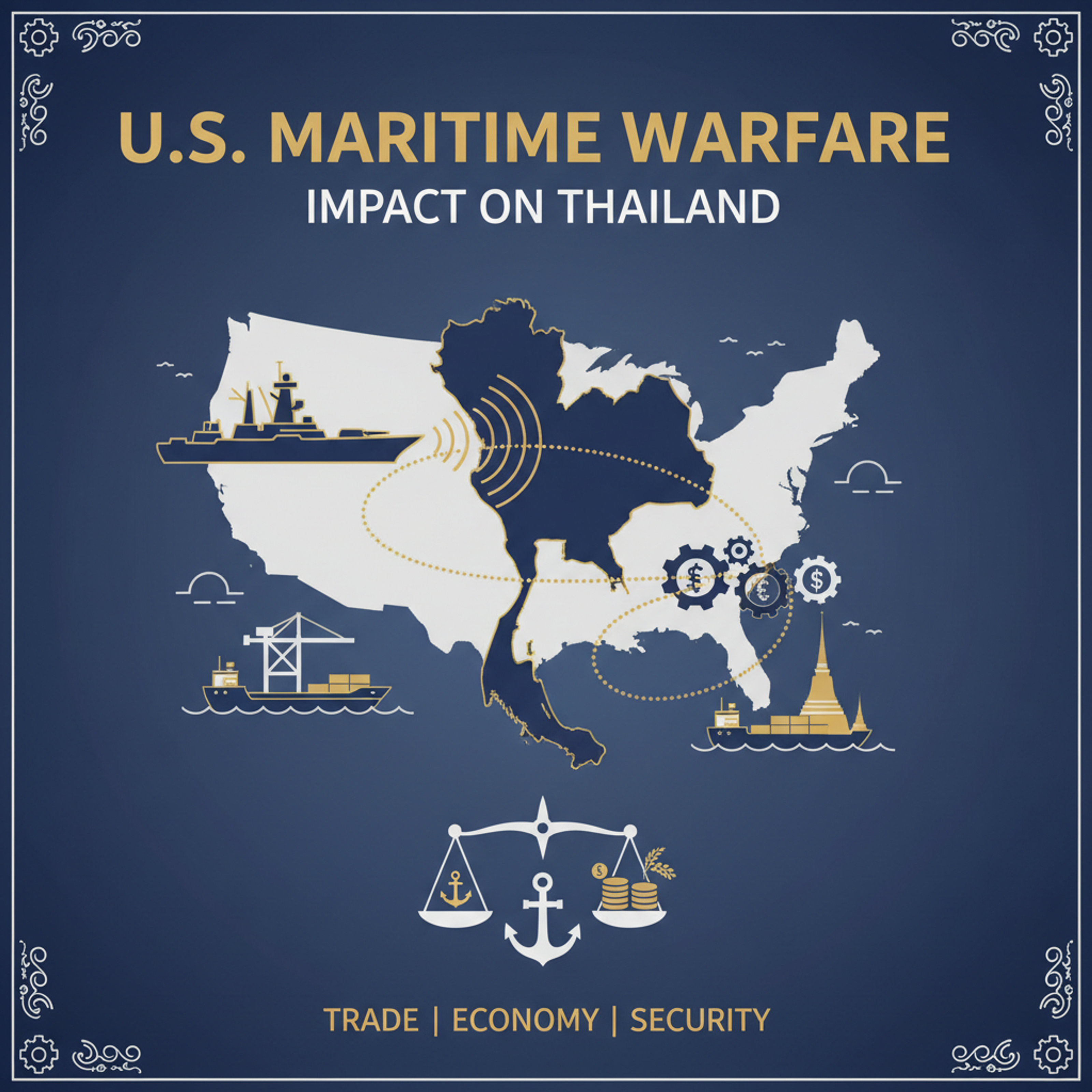
How will the changes in U.S. maritime policy impact Thailand?
## Background
The current changes in U.S. maritime policy occur amidst rising tensions in the Persian Gulf, particularly regarding the protection of oil exports through the Strait of Hormuz, a vital route for global oil transport. Thailand, as a net oil-importing country, will be directly affected by fluctuations in global oil prices when they rise.
## Policy Changes
As indicated by President Donald Trump, the U.S. may support insurance for oil tankers and deploy naval escorts to protect oil transport in the Strait of Hormuz, which illustrates the ongoing trade battles between the U.S. and other nations, particularly Iran. This could destabilize global oil markets and consequently impact Thailand.
## Implications for Thailand
These changes are likely to lead to rising oil prices, which will affect household and business expenses, as well as deter foreign investments due to increased uncertainty in the region.
## Preparations
Thailand should plan and prepare for this situation by exploring diverse sourcing options for oil and considering investment policies that respond to changing conditions.
## Conclusion
The changes in U.S. maritime policy are not merely a U.S. issue but have far-reaching implications for Thailand. Entrepreneurs and the government must be aware and ready to adapt to these changes to safeguard the nation's interests.
Contact ThaiLiving LAW for a consultation.